Mass-Marketed Energy Drinks Full Of … Calories and Sugars
In a world where everything is moving so rapidly, most people are always on the lookout for something to give them a boost. Many have turned to the fast-growing energy drink/energy shot market.

According to market statistics, energy drinks and shots are expected to become a $21.5 billion business by the end of the decade. The promises of instant energy in a convenient form is alluring to many – from teens and college students looking for an extra pick-me-up, to professionals trying to power through their hectic days, and even older adults looking to keep up with the younger generations.
Problem is, most of those energy drinks on the market are offering consumers more than they bargain for; namely, a ton of empty calories and sugars. These products have come into question over the last few months, as health professionals and media outlets have questioned the legitimacy of these mass marketed products.
The Caffeine Issue
No one questions caffeine, in moderation, can have a natural energy-boosting effect. According to a recent study from Johns Hopkins University, caffeine can help the brain retain information during a period of up to 24 hours subsequent to consuming it.You may not know it, but much of the rush you receive from mass-marketed energy products comes from the sugar contained in them. Some top-selling energy products on the market contain as much as 20 grams of sugar – as much as you would find in a regular sized candy bar.Many mass-marketed energy products have another secret: a lot of calories. According to nutritional facts, the most widely-consumed energy drinks on the market today have anywhere between 100 and 220 calories per serving.In that study, participants were asked to study images presented to them and five minutes later received either a placebo or 200 milligrams of caffeine, which is the average daily intake of caffeine in various forms for 80 percent of adult Americans (many health professionals and agencies, including the FDA, state that 400 milligrams of caffeine a day is a safe amount for adults).The caffeinated group was more capable of telling which images were similar to the ones they had viewed, instead of mistaking them as being the same – an ability known as “pattern separation”: being able to recognize difference between similar items, a marker of memory retention. So if the amount of caffeine isn’t the issue, what is?The arguments in this debate center on consumption by teens who are naturally drawn to energy products through mass marketing efforts and endorsement deals with athletes and celebrities. A recent study published in the journal Pediatrics reports that more teens are downing energy drinks; in 2003, 16% regularly consumed the drinks, while in 2008, that percentage jumped to 35%.And it’s not just the consumption of such drinks; it’s the quantities they are consuming. According to the American Academy of Pediatrics, adolescents should not consume more than 100 mg of caffeine a day. Just one energy drink nearly doubles that intake, and the addition of sodas and other caffeinated products adds up to an unhealthy amount.
Problem is, most of those energy drinks on the market are offering consumers more than they bargain for; namely, a ton of empty calories and sugars. These products have come into question over the last few months, as health professionals and media outlets have questioned the legitimacy of these mass marketed products.
The Caffeine Issue
No one questions caffeine, in moderation, can have a natural energy-boosting effect. According to a recent study from Johns Hopkins University, caffeine can help the brain retain information during a period of up to 24 hours subsequent to consuming it.You may not know it, but much of the rush you receive from mass-marketed energy products comes from the sugar contained in them. Some top-selling energy products on the market contain as much as 20 grams of sugar – as much as you would find in a regular sized candy bar.Many mass-marketed energy products have another secret: a lot of calories. According to nutritional facts, the most widely-consumed energy drinks on the market today have anywhere between 100 and 220 calories per serving.In that study, participants were asked to study images presented to them and five minutes later received either a placebo or 200 milligrams of caffeine, which is the average daily intake of caffeine in various forms for 80 percent of adult Americans (many health professionals and agencies, including the FDA, state that 400 milligrams of caffeine a day is a safe amount for adults).The caffeinated group was more capable of telling which images were similar to the ones they had viewed, instead of mistaking them as being the same – an ability known as “pattern separation”: being able to recognize difference between similar items, a marker of memory retention. So if the amount of caffeine isn’t the issue, what is?The arguments in this debate center on consumption by teens who are naturally drawn to energy products through mass marketing efforts and endorsement deals with athletes and celebrities. A recent study published in the journal Pediatrics reports that more teens are downing energy drinks; in 2003, 16% regularly consumed the drinks, while in 2008, that percentage jumped to 35%.And it’s not just the consumption of such drinks; it’s the quantities they are consuming. According to the American Academy of Pediatrics, adolescents should not consume more than 100 mg of caffeine a day. Just one energy drink nearly doubles that intake, and the addition of sodas and other caffeinated products adds up to an unhealthy amount.
Sugar, Sugar, SugarWhile all that sugar makes these energy products taste better, they come with one major pitfall: Sugar and fructose, both found in energy drinks, spike your insulin level for a brief amount of time, which translates into an infusion of energy. But it is short lived. When the sugar is used up, your insulin level will plummet and you will experience fatigue.According to the Pediatrics journal study, individuals who consume multiple energy drinks daily “could be taking in 120 mg to 180 mg of sugar,” or up to six times the maximum recommended daily intake. According to Men’s Health magazine, one leading energy drink contains nearly as much sugar as six glazed doughnuts. The study’s authors also noted that adolescents who consume energy drinks could be at risk for obesity and dental problems.
 |
| Awake Energy Shot |
Unwanted Calories Pile Up
Even these companies’ low-calorie or low-sugar options have upwards of 20 calories per serving. Someone who consumes these types of drinks regularly – twice or even three times a day – could be adding nearly 700 calories to their diets, or nearly 35 percent of the USDA’s recommended caloric intake. And that’s without eating.
Even these companies’ low-calorie or low-sugar options have upwards of 20 calories per serving. Someone who consumes these types of drinks regularly – twice or even three times a day – could be adding nearly 700 calories to their diets, or nearly 35 percent of the USDA’s recommended caloric intake. And that’s without eating.
Possible Option
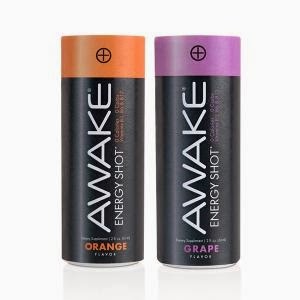
Awake Energy Shots provide much needed fuel and promote mental focus without the crash later. With 200 milligram of caffeine, combined with amino acids and B-vitamins, Awake Energy Shots provide long lasting physical and mental energy without any sugars or calories found in leading energy products on the market. Take Charge with Awake, available exclusively at SHOP.COM.
Awake Energy Shots provide much needed fuel and promote mental focus without the crash later. With 200 milligram of caffeine, combined with amino acids and B-vitamins, Awake Energy Shots provide long lasting physical and mental energy without any sugars or calories found in leading energy products on the market. Take Charge with Awake, available exclusively at SHOP.COM.


